



Análisis de los procesos automatizados en las líneas de producción de ladrillos: Creación de valor desde el agregado hasta el producto terminado.
La fabricación moderna de ladrillos ha evolucionado hasta convertirse en un proceso continuo de ingeniería de materiales, orquestado con precisión por un PLC (Controlador Lógico Programable). Esta línea de producción no es simplemente una transformación de la forma física, sino también una búsqueda y consolidación de los límites del rendimiento de los materiales. Desde las materias primas sueltas hasta los productos de construcción de alta resistencia, cada proceso conlleva una misión técnica específica y una lógica de control de calidad.
I. Emparejamiento preciso: Control digital en la fuente de la fuerza.
La línea de producción comienza con el sistema de alimentación y dosificación de materiales, que es la fuente de garantía de calidad del producto. Los agregados se dosifican continuamente mediante básculas de cinta, mientras que el cemento y el polvo se suministran con precisión mediante transportadores de tornillo. Todos los datos se retroalimentan al sistema. Sistema de control PLC En tiempo real. El valor fundamental de este proceso reside en su capacidad para vincular las propiedades macroscópicas del producto final, como la resistencia a la compresión y la durabilidad, con la proporción de cada partícula de materia prima a nivel microscópico mediante la dosificación digital. Incluso las mínimas desviaciones en el proceso de dosificación pueden amplificarse durante las etapas posteriores de vibración y curado. Por lo tanto, la dosificación de alta precisión es el requisito principal para lograr una calidad uniforme.
II. El efecto de "formación de roca artificial" de la vibración y compactación integradas.
Tras la colocación del material, la etapa de compactación por vibración del núcleo inicia un proceso de "densificación potente". Este proceso no consiste simplemente en una compresión física, sino que simula y acelera los mecanismos mecánicos de la formación de rocas en la naturaleza.
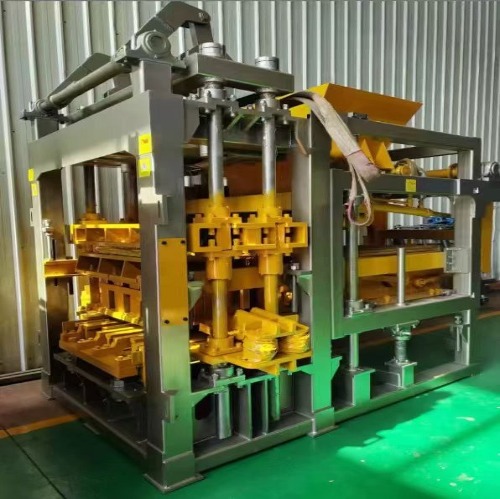
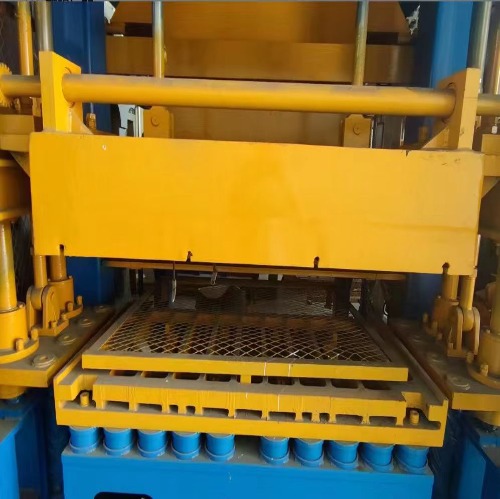
Vibración de alta frecuencia La vibración (3000-4500 veces/min) provoca un movimiento violento de las partículas de la mezcla, superando eficazmente la fricción interna entre ellas y expulsando rápidamente el aire atrapado durante el mezclado. La presión hidráulica resultante, de 16 a 32 MPa, empuja con fuerza las partículas vibradas hasta su estado más compacto. Este efecto combinado de "vibración antes de la compactación" o "vibración durante la compactación" permite alcanzar una densidad superior al 98 % en hormigón seco y duro en muy poco tiempo (8-15 segundos). La formación de lodo superficial es un indicador visual de una compactación adecuada, que significa que los huecos entre los agregados se han rellenado completamente con partículas finas y pasta de cemento, sentando así una base microestructural sin defectos para el posterior desarrollo de la resistencia.
III. Desmoldeo y transporte: Utilización industrial de la resistencia inicial
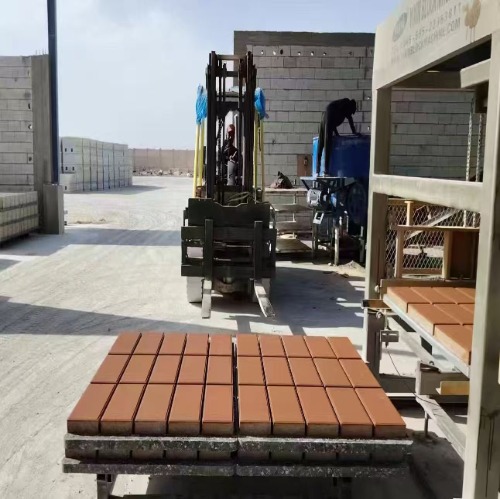
Tras la compactación por vibración, los ladrillos húmedos poseen una resistencia inicial de al menos 2 MPa, suficiente para soportar el desmoldeo inmediato y la manipulación mecánica. Este indicador resulta altamente económico, ya que elimina la necesidad de esperar un largo periodo de fraguado natural; el desmoldeo, la circulación de palés y el apilamiento mediante cinta transportadora pueden realizarse de forma continua y a alta velocidad en la línea de producción. La clave de este proceso reside en el rápido traslado de los ladrillos húmedos a la zona de curado, lo que libera costosos recursos de moldeo y optimiza el ciclo de producción.
IV. Curación: El poder silencioso del tiempo, la temperatura y la humedad.
Si la compactación por vibración proporciona a los ladrillos una estructura básica, el curado es la etapa crucial que les otorga resistencia. Un periodo de reposo de 2 a 4 horas permite que los ladrillos se adapten al ambiente y evita la deformación plástica, seguido de un curado húmedo de 7 días. Durante esta etapa, la reacción de hidratación del cemento continúa, generando constantemente nuevos productos de hidratación que llenan los poros capilares, lo que permite que la resistencia del ladrillo alcance el estándar de diseño en 28 días. Mantener una temperatura ambiente de al menos 5 °C durante la construcción invernal es fundamental para evitar el estancamiento de la reacción de hidratación o los daños por heladas, asegurando así un desarrollo continuo de la resistencia.
En resumen, esto Línea de producción de ladrillos altamente automatizada es esencialmente un sistema preciso de fortalecimiento de materiales. A través de un proceso de tres etapas de cálculo de lotes, moldeo por vibración y temperatura y curado de humedadCompleta en horas un proceso de densificación que en la naturaleza tardaría millones de años, transformando los residuos sólidos industriales o los áridos naturales en materiales de alta calidad.materiales de construcción modernos y sostenibles.