



A Guide to Purchasing Brick-Making Machinery: Why Total-Line Integration—Not Just Price—Determines True Cost-Efficiency
If you have visited the market for brick-making machinery recently, you may have noticed a subtle shift: a few years ago, the first question a customer would ask upon sitting down was, "How much does this main machine cost?" Today, an increasing number of buyers ask, "Can you provide the entire brick-making production line?" This change is no coincidence. The era of comparing individual machines based solely on price is fading, as more investors have come to realize a crucial truth: saving a few tens of thousands on a standalone machine is a false economy. The costs incurred—due to production bottlenecks, disputes over after-sales support, and delays in commissioning—far outweigh any initial savings.
I. The Hidden Costs of Poor System Integration Often Emerge Only After Production Begins
The most common pitfall in purchasing individual machines is a mismatch in operational rhythm. For instance, if the main forming machine has a 15-second cycle, but the mixer requires 20 seconds to prepare a batch, the entire line must pause repeatedly to wait for material. Alternatively, if the palletizer cannot keep pace with the forming machine, wet bricks will pile up on the conveyor, leading to a sharp increase in breakage rates. The root cause of these issues is not that any single piece of equipment is "broken," but rather that the components were never designed or integrated as a cohesive system.
Even more insidious are the costs associated with after-sales support. The manufacturer of the main machine might blame the mixer for uneven material discharge; the mixer manufacturer might point to an incorrect conveyor belt specification; and the conveyor supplier might claim the issue stems from operator error. Caught in the middle, the customer is left making endless phone calls while the losses from downtime continue to mount. For overseas clients—such as those in Africa or the Middle East—this finger-pointing can be particularly devastating, as it is often impossible to bring representatives from multiple suppliers together on-site to resolve the dispute.
Another frequently underestimated factor is the commissioning period. Since different manufacturers often use distinct PLC control logic and unique operating interfaces, workers are forced to learn multiple, disparate systems. On-site commissioning for equipment purchased piecemeal can easily take weeks or even months, whereas for a complete production line, the time from the equipment’s arrival to the start of formal brick production is typically just one to two weeks. For brick manufacturers racing to meet supply deadlines for construction sites, this time difference translates directly into cash flow.
II. What Does "Line Integration" Actually Entail?
Matching the mold to the main machine is the first critical step. As the component most prone to wear, the mold directly determines the appearance and dimensional precision of the finished bricks. Factors such as the grade of steel used for the mold, the heat-treatment process, and how well the mold aligns with the vibration parameters of the main machine all influence both product quality and the mold’s service life. If a mold is sourced from a third party—whose understanding of the main machine’s specific vibration characteristics may be limited—the likelihood of issues like difficult demolding or damaged edges increases significantly. When the mold and the main machine are provided by the same manufacturer, their parameters are synchronized during the design and commissioning phases, ensuring greater precision when molds are swapped.
Matching the mixing system to the forming system determines production capacity utilization. The discharge capacity and speed of the mixer must be rhythmically synchronized with the forming cycle of the main machine. This is especially true for the production of multi-layer (faced) bricks, where the timing of the material feed for the surface layer and the base layer requires precise control; the stability of the supply from the mixer directly impacts the surface quality of the final product. In a complete production line solution, the discharge speed of the batching hoppers, the capacity of the mixers, and the cycle time of the forming machine are all designed against a unified production capacity target before the equipment even leaves the factory.
Matching the palletizing system to the curing system is key to the product yield rate. The fewer the handling steps—and the smoother the movement—between the forming machine and the curing area, the lower the rate of damage to the "green" (uncured) bricks. The number of layers handled by the palletizer, the method of transporting pallets, and the compatibility with the curing racks must all be determined during the initial planning phase of the production line. In a piecemeal procurement scenario, customers often wait until the main machine arrives to consider their palletizing strategy; such hasty decision-making frequently leads to green bricks being repeatedly bumped or damaged during transport.
Environmental protection facilities have evolved from an "optional add-on" into an "essential requirement." Dust removal systems, wastewater recycling and reuse systems, and noise control measures—in regions with increasingly stringent environmental regulations, equipment may fail to pass official inspections if these supporting facilities are missing. In a "complete production line" delivery model, the integration of environmental protection facilities with the main machinery is incorporated into the initial design, rather than simply tacking on a standalone dust collector as an afterthought.
III. After-Sales Support and Spare Parts: The Hidden Value of the Complete-Line Model
Only those who have experienced a production stoppage truly understand what the speed of after-sales response means to a brick factory. A single day of downtime results in lost daily output, wasted labor costs, and potential penalties for failing to fulfill orders. A core advantage of purchasing an entire production line is having a single point of responsibility. Whether an issue arises during mixing, forming, or palletizing, the customer only needs to deal with one manufacturer. The manufacturer then coordinates internally to determine the root cause, sparing the customer from having to act as an "arbiter" themselves.
Spare parts management is equally critical. Inventory strategies for wear-and-tear components—such as molds, seals, hydraulic oil filter elements, and bearings for vibration motors—directly dictate the duration of any potential downtime. A full-line supplier maintains a comprehensive list of wear parts for the entire system; they can offer recommendations on stock levels based on the customer’s production schedule and may even establish local warehouses for frequently used parts. In contrast, when equipment is purchased piecemeal, the customer must manage inquiries, orders, and shipments with multiple different vendors—where a delay at any stage can bring the entire production line to a standstill.
Another often-overlooked dimension is remote diagnostics and predictive maintenance. Leading brick-making machinery manufacturers now incorporate remote operations and maintenance systems into their complete-line solutions. By transmitting real-time equipment performance data, the manufacturer can alert the customer to replace parts before a failure occurs, or provide remote guidance to operators on adjusting parameters. For brick factories located in remote areas or regions with a shortage of technical personnel, this capability is far more valuable than receiving a few extra sets of molds.
IV. How to Evaluate the Reliability of a Complete-Line Solution
First, examine the scope of the supporting equipment offered by the manufacturer. A supplier truly capable of delivering a complete production line will have a product portfolio that covers the entire process—from batching, mixing, and forming to palletizing and packaging—rather than focusing solely on the main machinery while outsourcing or white-labeling the rest of the components. The comprehensiveness of a product line reflects the manufacturer’s depth of understanding regarding production line system integration.
Next, check for existing, verifiable full-line installations. Ask the manufacturer to provide the locations of operational projects that feature similar production capacities, raw material types, and product structures. Ideally, you should be able to contact current users to ask three key questions: How long did the commissioning process take? How fast is the actual after-sales response? What is the lead time for spare parts? Equipment seen at a trade show or specifications listed in a brochure cannot replace the day-to-day experience of an actual user.
Third, assess the manufacturer’s willingness to engage in early-stage planning. A responsible full-line supplier will take the time—before any contract is signed—to understand your site conditions, power capacity, raw material characteristics, and target product mix, subsequently offering tailored recommendations for equipment selection and facility layout. If a manufacturer shows no interest in these details and only pushes for an order, their so-called "full-line solution" is likely nothing more than a bundled price quote for a collection of individual machines.
Finally, calculate the total lifecycle cost. The price of the machinery itself is merely the initial down payment. True operating costs encompass electricity consumption, labor, the wear and tear of consumable parts, losses incurred during downtime, and expenses related to environmental compliance. A production line that costs 10% more but is better matched to your specific needs might pay for that price difference within the very first year through savings on electricity and labor. Conversely, "saving" 10% on the initial purchase price only to face frequent bottlenecks, unplanned downtime, and disputes with the supplier is a poor investment by any measure.
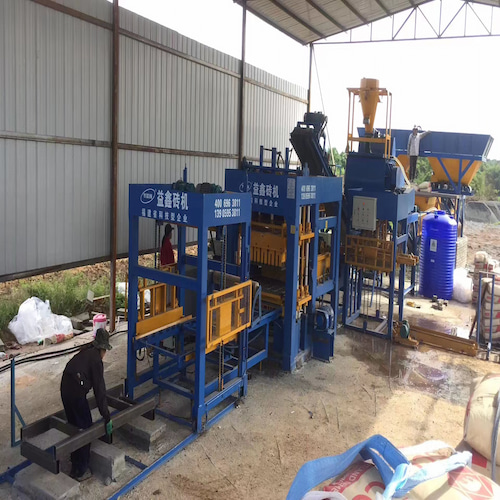
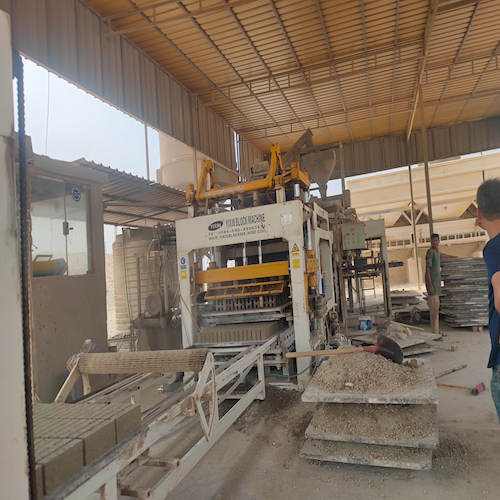
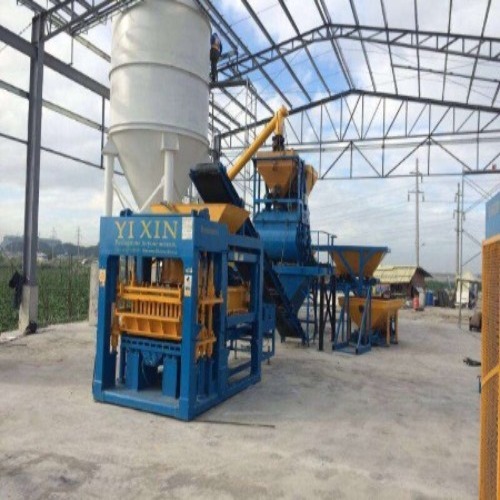
Purchasing a brick-making machine is not just buying a product; it is acquiring a production system that will operate daily for the next five to ten years. While the main machine determines whether you can produce bricks at all, the integration of the entire line determines whether you can produce them consistently, stably, and cost-effectively. Before signing a contract, thoroughly vet each of the seven key components—molds, mixing, forming, palletizing, environmental systems, after-sales support, and spare parts. Doing so is far more valuable than simply haggling for a small discount on the price of the machinery itself.